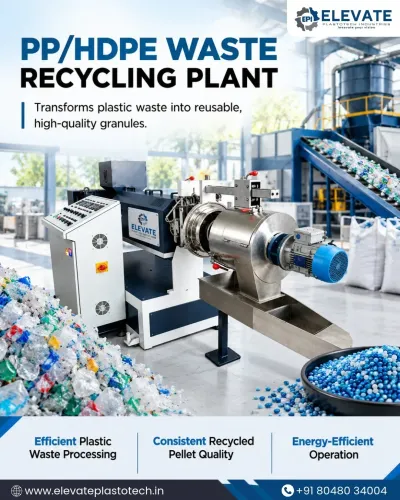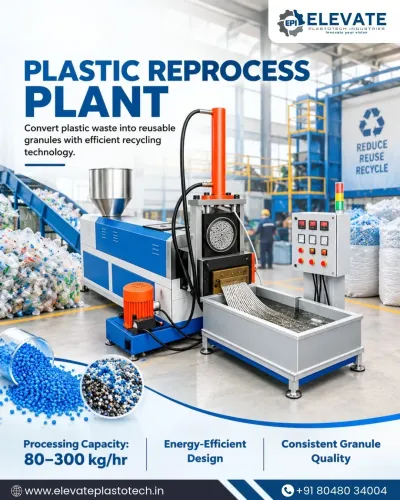
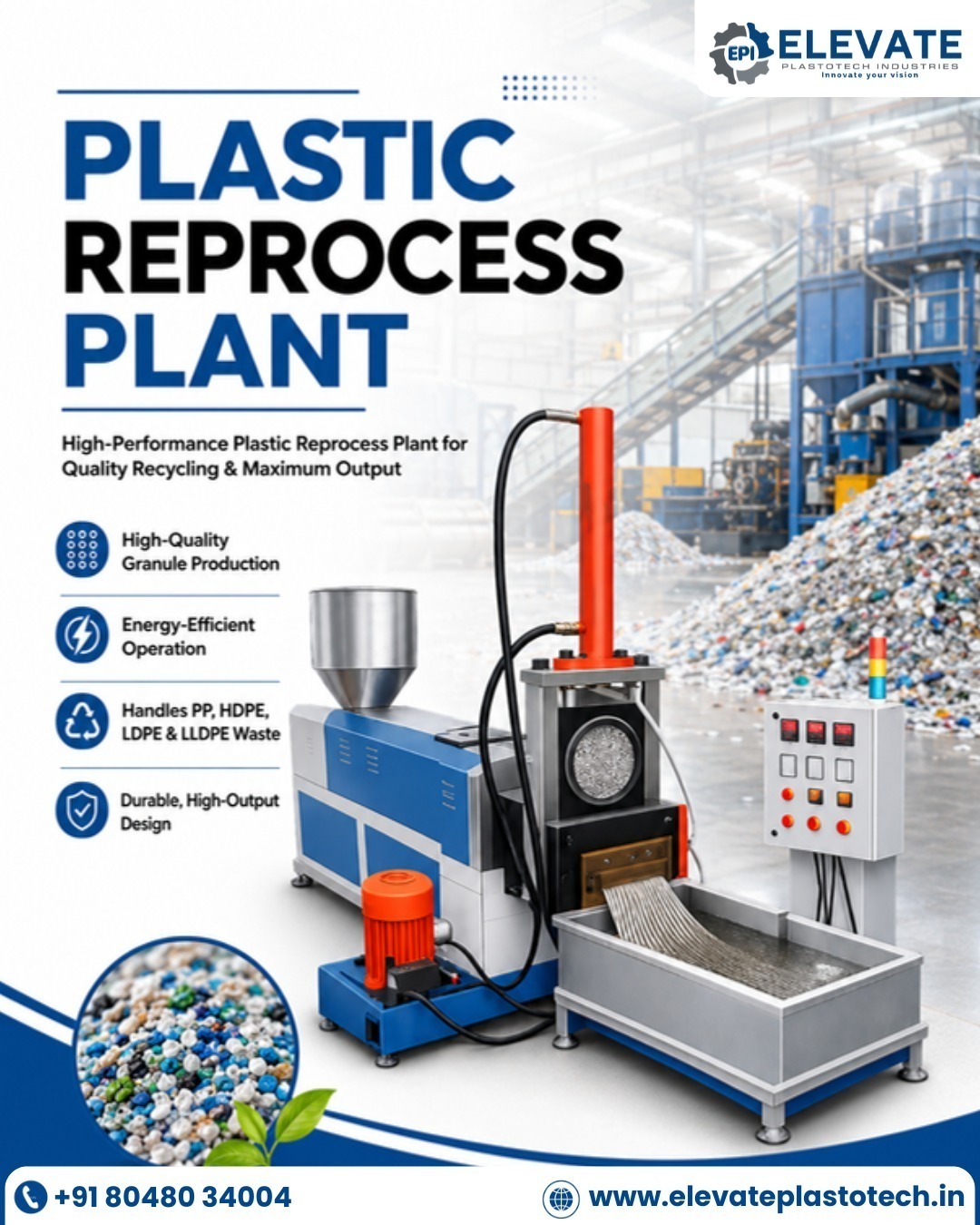
Plastic recycling has become an important part of modern manufacturing as industries look for better ways to manage plastic waste and reuse valuable raw materials. A high-performance Plastic Reprocess Plant helps convert plastic waste into reusable plastic granules, creating opportunities for recycling businesses and plastic product manufacturers.
If you are searching for a Plastic Reprocess Plant Manufacturer in Ahmedabad, choosing the right machinery is essential for achieving consistent production, efficient processing, and reliable granule quality.
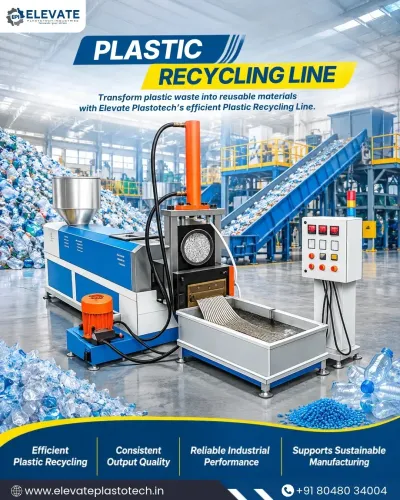
Elevate Plastotech Industries offers plastic reprocessing machinery designed to process plastic materials such as LDPE, HDPE, and PP into reusable granules. With different machine models and production capacities, businesses can choose equipment that matches their recycling needs.
Whether you are looking for a Plastic Reprocess Plant Supplier in Gujarat or a Plastic Reprocess Plant Distributor in India, understanding the working process, machine specifications, applications, and benefits can help you make the right investment decision.
In this guide, we explain how a plastic reprocess plant works, its key features, applications, selection factors, and why Elevate Plastotech Industries is worth considering for your plastic recycling machinery needs.
What Is a Plastic Reprocess Plant?
A Plastic Reprocess Plant is an industrial machine system that converts plastic waste into reusable plastic granules through melting, extrusion, filtration, cooling, and pelletizing.
Plastic waste generated from manufacturing units, packaging industries, plastic product factories, and other sources can be processed through suitable recycling machinery.
Depending on their quality and material properties, the resulting recycled granules can be used as raw materials to manufacture different plastic products.
A plastic reprocessing plant can process materials such as:
* LDPE (Low-Density Polyethylene): Commonly used in plastic films, bags, and flexible packaging.
* HDPE (High-Density Polyethylene): Used in containers, pipes, drums, and industrial products.
* PP (Polypropylene): Used in household products, packaging, automotive components, and industrial applications.
The machine configuration and processing conditions determine which plastic materials it can handle efficiently.
How Does a Plastic Reprocessing Plant Work?
A plastic reprocessing machine follows a systematic process to convert plastic waste into reusable granules. Each stage contributes to the quality and consistency of the final material.
1. Plastic Waste Collection and Sorting
The recycling process begins with collecting plastic waste from manufacturing industries, packaging facilities, and other sources.
The collected materials are separated by polymer type, color, and quality. Proper sorting helps prevent incompatible materials from mixing during processing.
2. Plastic Washing and Cleaning
Plastic waste may contain dust, dirt, labels, oil, and other unwanted substances.
A suitable washing system helps remove these contaminants. The material is then dried before entering the extrusion process, where necessary.
3. Plastic Shredding and Crushing
A plastic shredder or crusher reduces large plastic waste pieces into smaller flakes.
This process makes the material easier to feed into the extruder and supports consistent processing.
4. Plastic Melting and Extrusion
The processed plastic material enters the extruder through a feeding system.
Inside the extruder, controlled heating and screw movement melt and mix the plastic material. The molten plastic is then pushed towards the filtration and extrusion section.
Proper temperature control and screw design are important for stable processing.
5. Plastic Filtration
The molten plastic passes through a filtration system that helps remove solid impurities and unwanted particles.
Effective filtration supports cleaner recycled material and improves output consistency.
6. Cooling and Granule Production
After extrusion and filtration, the plastic material is cooled using a suitable cooling arrangement.
The extruded material is then cut into small granules through a pelletizing or cutting system.
The finished recycled plastic granules can be collected, packed, and supplied to plastic manufacturing industries.
Key Features of a Plastic Reprocess Plant
When purchasing plastic recycling machinery, businesses should understand the features that influence machine performance and production quality.
The Plastic Reprocess Plant offered by Elevate Plastotech Industries includes the following model-dependent features:
1. Multiple Model Options
Different models suit different production requirements.
The listed EPIRP models include:
* EPIRP-75
* EPIRP-90
* EPIRP-110
* EPIRP-120
2. Production Capacity
The listed Plastic Reprocess Plant models offer a production capacity ranging from approximately 80 kg/hr to 300 kg/hr, depending on the selected configuration and processing conditions.
3. Plastic Material Compatibility
The machine is designed for processing commonly used plastic materials, including:
* LDPE
* HDPE
* PP
4. Adjustable Operating Speed
Adjustable speed settings help operators manage processing according to material characteristics and production requirements.
5. Durable Construction
The plant uses a high-grade steel structure designed for industrial plastic processing operations.
6. Semi-Automatic Operation
The listed machine configuration features semi-automatic operation, an electric drive, and suitable feeding and pelletizing accessories.
7. Granule Production
The plant converts suitable plastic waste into reusable plastic granules for further manufacturing applications.
Top 5 Plastic Reprocess Plant Selection Factors for Your Business
Choosing the right machinery is one of the most important decisions when starting or expanding a plastic recycling business.
If you are comparing the Top 5 Plastic Reprocess Plant options on the market, consider these five factors before purchasing.
1. Production Capacity
Production capacity determines how much plastic waste the machine can process per hour.
Before purchasing, calculate your expected daily production needs and choose a machine that matches your business.
For example, Elevate Plastotech Industries offers Plastic Reprocess Plant models with capacities ranging from 80 kg/hr to 300 kg/hr.
2. Raw Material Compatibility
Different plastic materials require suitable processing conditions.
Check whether the machine supports the materials you plan to recycle, such as PP, HDPE, and LDPE.
Selecting compatible machinery helps maintain consistent processing and reduces operational issues.
3. Machine Construction and Durability
A plastic reprocessing plant is an industrial investment. Therefore, examine the machine structure, screw and barrel design, electrical components, and overall construction quality.
Durable machinery can support reliable industrial operations when properly installed and maintained.
4. Energy Consumption and Operating Costs
Electricity is an important operating expense in plastic recycling.
Before purchasing, check the motor power, heating system, operating requirements, and expected electricity consumption.
Compare overall operating costs rather than selecting machinery based only on its initial purchase price.
5. Manufacturer Experience and Technical Support
The right machinery supplier should provide relevant technical information, installation guidance, spare-parts availability, and after-sales support.
Discuss your material requirements and production targets with the manufacturer before finalizing your purchase.
These five factors can help you compare different plastic reprocessing plants and select suitable machinery for your business.
Benefits of Installing a Plastic Reprocessing Plant
Investing in a suitable plastic reprocessing machine can offer several advantages to recycling businesses and plastic manufacturers.
Efficient Plastic Waste Management
A plastic reprocessing plant converts suitable plastic waste into reusable raw materials, reducing the amount of discarded plastic sent for disposal.
Production of Recycled Plastic Granules
The machine turns processed plastic waste into granules for use in suitable manufacturing applications.
Better Raw Material Utilization
Recycling allows businesses to recover value from suitable plastic scrap and reuse the material in manufacturing processes.
Flexible Production Options
Different machine models and capacities let businesses choose machinery to match their production needs.
Support for Sustainable Manufacturing
Plastic recycling helps conserve resources by encouraging the reuse of suitable plastic materials and supporting a circular manufacturing approach.
Business Opportunities
Plastic recycling machinery can create opportunities for entrepreneurs, recycling companies, and existing plastic manufacturers looking to expand.
Applications of Recycled Plastic Granules
Plastic granules produced by a reprocess plant can be used in several industries, depending on polymer type, recycled material quality, and product specifications.
Common applications include:
* Plastic buckets and containers
* Plastic pipes and fittings
* Packaging products
* Plastic sheets and films
* Household plastic products
* Industrial plastic components
* Agricultural plastic products
* Plastic molded articles
Manufacturers should test recycled granules for the properties required by their final products before using them in production.
Plastic Reprocessing Plant Manufacturer in Ahmedabad – Elevate Plastotech Industries
Finding a reliable machinery manufacturer is essential for establishing an efficient plastic recycling operation.
Elevate Plastotech Industries is based in Ahmedabad, Gujarat, and offers plastic processing and recycling machinery for industrial applications.
The company provides Plastic Reprocess Plant models designed to convert suitable plastic waste into reusable plastic granules.
Why Consider Elevate Plastotech Industries?
* Multiple Machine Models: EPIRP-75, EPIRP-90, EPIRP-110, and EPIRP-120 options.
* Production Capacity: Listed capacity options from 80 kg/hr to 300 kg/hr.
* Material Compatibility: Designed for processing LDPE, HDPE, and PP.
* Industrial Construction: High-grade steel structure.
* Technical Guidance: Discuss machine configuration and installation requirements with the company.
* Supply Across India: Machinery solutions are available for customers across India.
For businesses searching for a Plastic Reprocess Plant Manufacturer in Ahmedabad, Elevate Plastotech Industries is an option worth exploring.
Plastic Reprocess Plant Supplier in Gujarat
Gujarat is home to a wide range of manufacturing and industrial businesses that require plastic processing and recycling machinery.
Businesses searching for a Plastic Reprocess Plant Supplier in Gujarat should compare machine capacity, material compatibility, construction quality, and technical support before purchasing.
Located in Ahmedabad, Elevate Plastotech Industries offers plastic reprocessing machinery for customers looking to establish or expand their recycling operations.
Whether you are setting up a new recycling unit or upgrading existing equipment, discuss your production requirements with the company to identify a suitable machine model.
Plastic Reprocess Plant Distributor in India
Plastic recycling businesses across India require machinery that matches their production targets, raw material availability, and investment plans.
If you are searching online for a Plastic Reprocess Plant Distributor in India, check the manufacturer or supplier's product range, specifications, and delivery arrangements.
Elevate Plastotech Industries supplies plastic reprocessing machinery to customers across India. Buyers can directly contact the company to discuss machine models, pricing, installation, and supply requirements.
Choosing machinery from an established manufacturer or supplier can help you make a more informed purchasing decision.
How to Choose the Right Plastic Reprocessing Plant for Your Business?
Before investing in a plastic recycling plant, consider the following practical points:
1. Identify the type of plastic waste you want to recycle.
2. Estimate your required production capacity in kg/hr.
3. Check the available space for installing the machinery.
4. Understand the machine's power and electricity requirements.
5. Evaluate the filtration and pelletizing arrangements.
6. Check installation and maintenance requirements.
7. Compare machine specifications and commercial quotations.
8. Discuss technical support and spare parts availability.
Understanding these requirements will help you select the right Plastic Reprocess Plant for your operations.
Frequently Asked Questions (FAQs)
1. What is a Plastic Reprocess Plant used for?
A Plastic Reprocess Plant converts suitable plastic waste into reusable plastic granules by melting, extruding, filtering, cooling, and pelletizing.
2. Which plastic materials can a Plastic Reprocess Plant process?
Depending on the machine configuration, plastic reprocessing machinery can process materials such as PP, HDPE, and LDPE. The listed Elevate Plastotech Industries Plastic Reprocess Plant models support LDPE, HDPE, and PP.
3. What is the production capacity of a Plastic Reprocess Plant?
The production capacity depends on the machine model, plastic material, and operating conditions. The listed Elevate Plastotech Industries models offer capacities ranging from approximately 80 kg/hr to 300 kg/hr.
Keywords