Plastic Reprocessing Plant: How It Converts Plastic Waste into Reusable Granules
Plastic waste management has become an important part of modern manufacturing. Many industries generate plastic scrap during production, creating an opportunity to recover valuable materials instead of discarding them. A Plastic Reprocessing Plant converts suitable plastic waste into reusable granules for new product manufacturing.
With efficient extrusion, melt filtration, and pelletizing technology, this equipment supports plastic recycling operations while helping manufacturers improve material utilization. Choosing the right plant can also help businesses manage processing costs and maintain consistent recycled-granule quality.
What Is a Plastic Reprocess Plant?
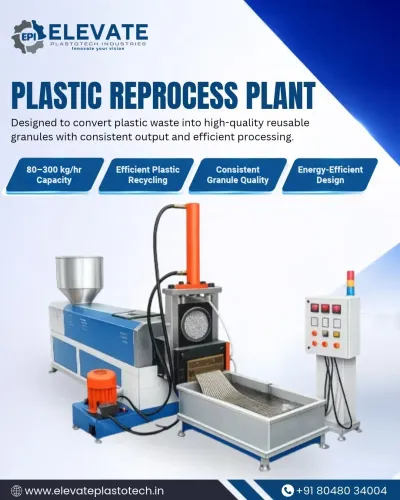
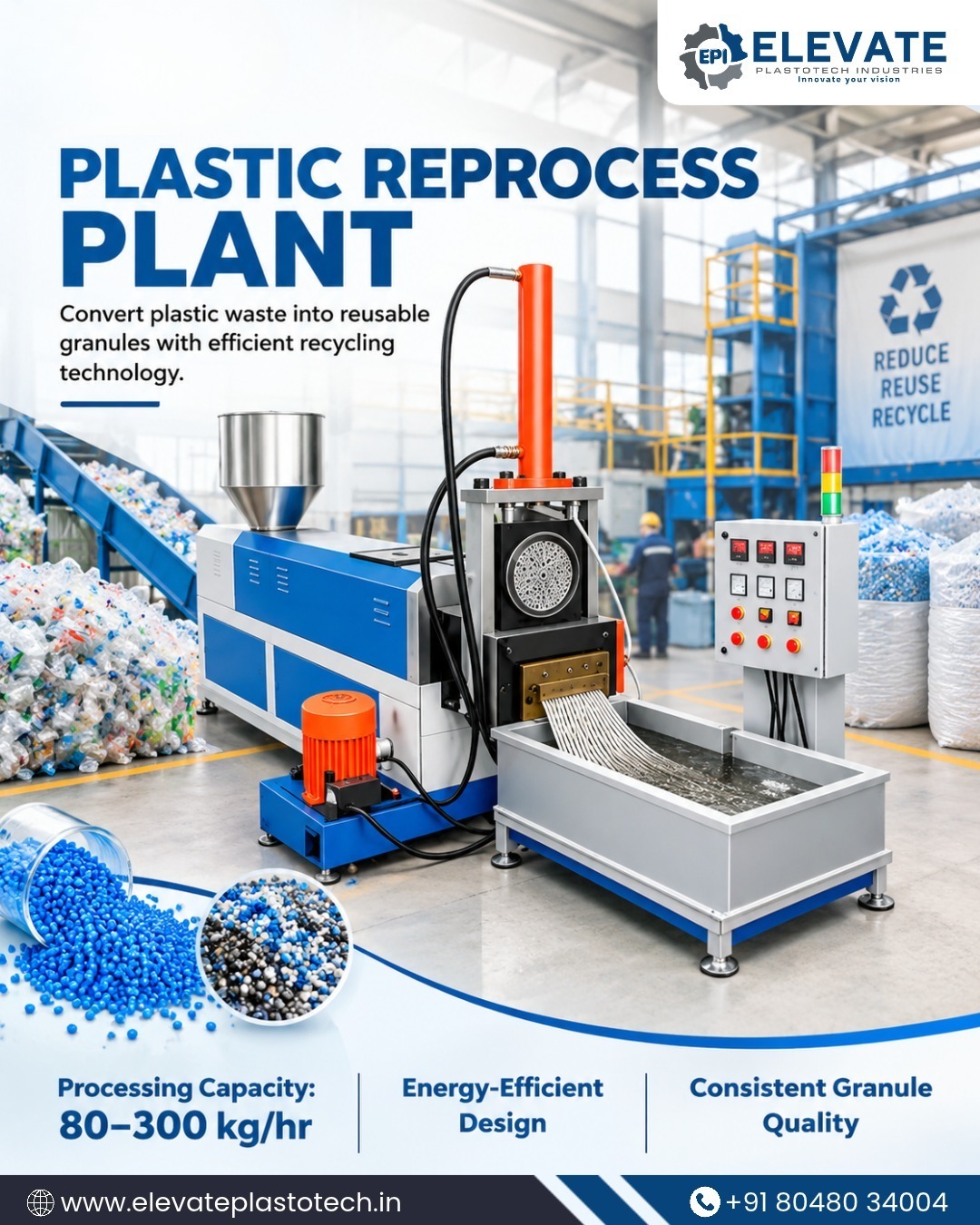
A Plastic Reprocess Plant is an industrial recycling system that transforms suitable plastic waste into reusable plastic granules. Depending on their quality, polymer type, and intended application, these granules can be used as raw materials in compatible manufacturing processes.
The plant generally includes an extruder, heating system, filtration unit, pelletizing mechanism, and control panel. Depending on the waste type, the plant may also need shredders, washing units, and dryers.
Businesses looking for a Plastic Reprocess Plant Manufacturer in Ahmedabad should evaluate equipment capacity, material compatibility, and processing requirements before selecting a suitable system.
How Does a Plastic Reprocess Plant Convert Plastic Waste into Reusable Granules
A Plastic Recycling Plant processes plastic waste through several stages to produce material suitable for further manufacturing.
1. Sorting and Preparing Plastic Waste
The process begins by sorting plastic waste by type, color, and condition. Removing incompatible materials and contaminants helps improve processing consistency. Depending on the incoming waste, shredding, washing, and drying may also be necessary.
2. Melting Plastic Through Extrusion
The prepared material enters the extruder, where controlled heat and mechanical movement melt the plastic. The screw transports the molten polymer through the barrel towards the extrusion die. Appropriate temperature settings help maintain stable processing conditions.
3. Filtering the Molten Material
The molten plastic passes through a filtration system that removes solid contaminants. Choosing the right filtration method improves the cleanliness and consistency of the processed material.
4. Converting Plastic into Granules
After filtration, the molten polymer passes through a die and enters a pelletizing system. Depending on the machine configuration, the material may be cut into granules using strand cutting, water-ring pelletizing, or another suitable method.
5. Cooling and Collecting the Granules
The newly formed granules are cooled and collected for storage or further processing. Manufacturers can inspect the finished material for size consistency, contamination, color, and other properties required for the intended application.
What Are the Benefits of a Plastic Reprocessing Plant
Investing in a suitable Plastic Recycling Machine can offer several advantages for plastic manufacturers and recycling businesses.
* Better Waste Management: Helps recover usable plastic scrap and reduces the amount of recyclable material sent for disposal.
* Improved Material Utilization: Converts suitable waste into granules that can serve as raw material for compatible products.
* Potential Cost Savings: Recycled granules may reduce dependence on virgin plastic resin where their properties meet production requirements.
* Consistent Production: Appropriate temperature control, filtration, and pelletizing help maintain more uniform output.
* Resource Efficiency: Supports the recovery and reuse of plastic materials in suitable manufacturing applications.
* Flexible Processing Options: Depending on the machine design, the plant can process selected plastic types for different industrial requirements.
Actual performance depends on the incoming material, plant configuration, energy consumption, and operating conditions.
What Are the Applications of Reprocessed Plastic Granules
A plastic granule making machine supports recycling operations that supply raw materials to various industries.
Common applications include:
* Plastic Packaging: Producing selected packaging products using compatible recycled polymers.
* Injection Molding: Manufacturing suitable molded components and utility products.
* Household Products: Producing certain containers, organizers, and everyday plastic items.
* Industrial Components: Supplying recycled material for compatible industrial products.
* Plastic Film Manufacturing: Using selected recycled polymers in film applications when material quality and performance requirements permit.
* Pipes and Fittings: Processing suitable recycled materials for applications that meet the relevant product specifications and standards.
Material testing, product performance requirements, and applicable regulations should determine the final application.
How to Choose the Right Plastic Reprocessing Plant
Selecting the right Plastic Reprocessing Machine requires careful consideration of your production targets and the type of plastic waste you intend to process.
Consider these important factors:
* Processing Capacity: Determine the required output in kilograms per hour.
* Plastic Compatibility: Confirm whether the plant supports your intended polymers, such as suitable PE or PP grades.
* Extruder Configuration: Review screw design, heating zones, and operating controls.
* Filtration System: Select a suitable arrangement for the expected contamination level.
* Pelletizing Technology: Choose a granule-formation method that matches your material and production requirements.
* Energy Efficiency: Evaluate the power requirements and expected operating expenses.
* Maintenance Needs: Check component accessibility, spare parts availability, and servicing requirements.
* Technical Support: Discuss installation, operator training, and after-sales assistance.
Comparing these factors can help you choose equipment that fits your facility's requirements and budget.
Why Choose Elevate Plastotech Industries
When investing in plastic recycling machinery, businesses should consider equipment configuration, processing capacity, material compatibility, and long-term operating costs.
Elevate Plastotech Industries provides a point of contact for businesses exploring plastic processing and recycling equipment. If you are searching for a Plastic Reprocess Plant Supplier in Gujarat, discuss your raw material type, production targets, and required granule quality with the company.
Businesses looking for a Plastic Reprocess Plant Distributor in India should also confirm machine availability, technical specifications, delivery arrangements, and service support before purchasing.
Request a quotation based on your operational needs to identify a suitable configuration for your recycling facility.
A Plastic Reprocess Plant helps transform suitable plastic waste into reusable granules through sorting, extrusion, filtration, pelletizing, and cooling. By recovering usable polymers, businesses can improve material utilization, support recycling activities, and supply recycled raw materials for compatible manufacturing processes.
Selecting the right equipment depends on processing capacity, polymer compatibility, filtration requirements, granule quality, and operating costs. Proper maintenance and process monitoring are also essential for reliable performance.
Contact Elevate Plastotech Industries to discuss your plastic recycling requirements and enquire about a suitable plastic reprocessing solution for your business.
Frequently Asked Questions (FAQs)
1. What is a Plastic Reprocess Plant used for?
A Plastic Reprocess Plant converts suitable plastic waste and manufacturing scrap into reusable granules for compatible plastic production applications.
2. How does a plastic reprocessing machine work?
It melts prepared plastic through an extrusion system, filters the molten material, and converts it into granules using a suitable pelletizing mechanism. The granules are then cooled and collected.
3. Which types of plastic can a Plastic Reprocessing Plant process?
Depending on the machine configuration, suitable materials may include polyethylene (PE) and polypropylene (PP). Compatibility depends on the polymer grade, contamination level, and equipment specifications.
Keywords