PP/HDPE Waste Recycling Plant Converts Plastic Waste into High-Quality Granules
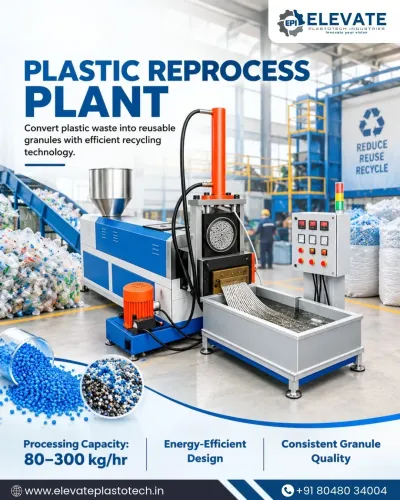
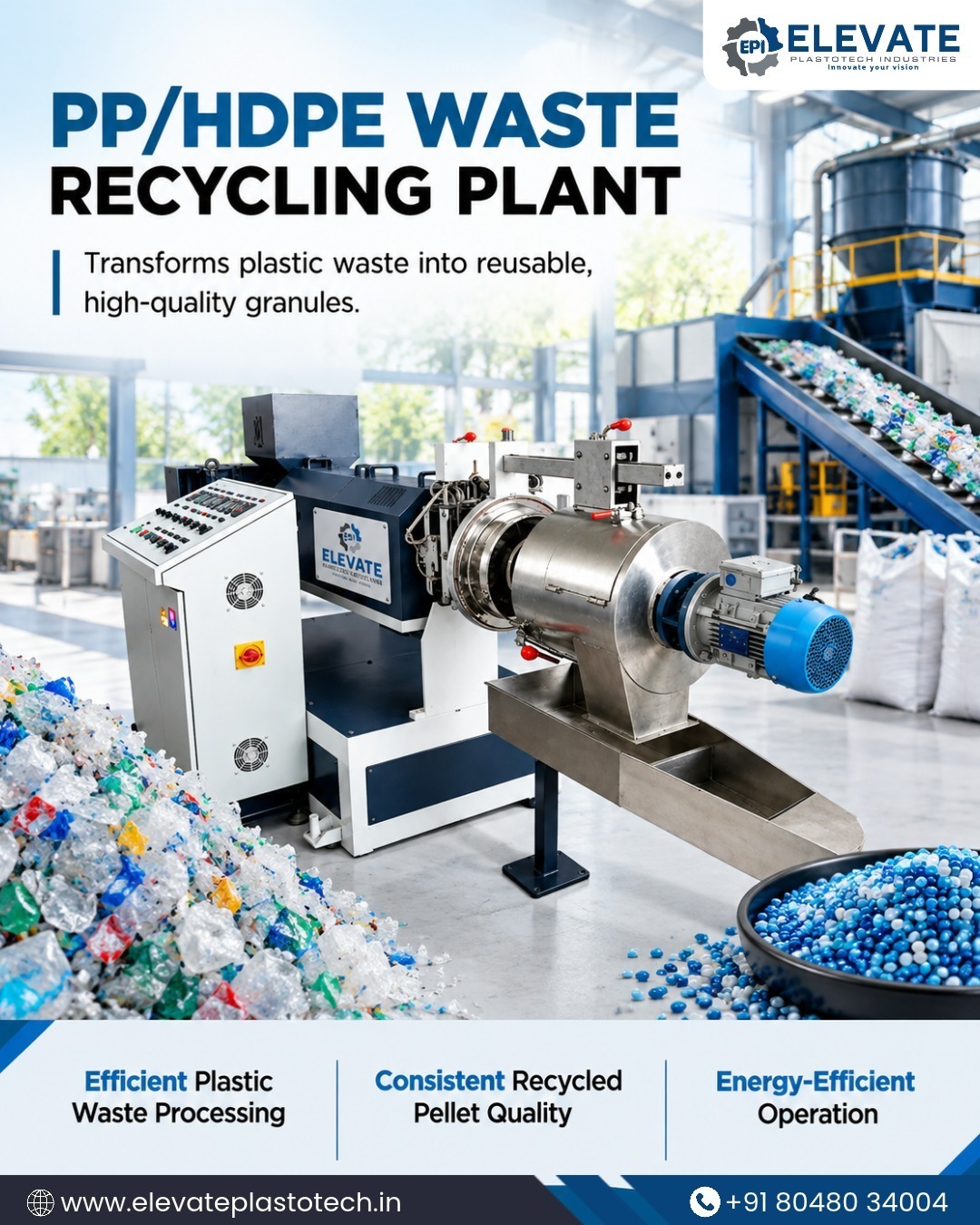
Plastic waste recycling is becoming a key part of modern manufacturing as businesses seek practical ways to recover materials and reduce waste. A PP/HDPE waste recycling plant converts discarded polypropylene (PP) and high-density polyethylene (HDPE) into reusable plastic granules for various industrial applications.
Elevate Plastotech Industries provides plastic recycling machinery solutions to help businesses improve plastic waste processing and material recovery. With the right recycling system, manufacturers can sort, shred, wash, extrude, filter, and pelletize plastic waste to produce granules for further manufacturing.
For businesses looking for a PP/HDPE Waste Recycling Plant in Ahmedabad, choosing equipment that matches their material type, production capacity, and output requirements is a key step toward efficient recycling operations.
What Is a PP/HDPE Waste Recycling Plant
A PP/HDPE Waste Recycling Plant is an industrial system that processes polypropylene and high-density polyethylene waste into reusable plastic granules. These plastics are commonly found in containers, packaging materials, caps, crates, household products, and other manufactured items.
The plant uses a combination of processing equipment to prepare plastic waste, remove contaminants, melt the material, and convert it into granules. The quality of the finished material depends on the type of plastic fed into the machine, the level of contamination, the equipment setup, and the operating parameters.
For manufacturers and recycling businesses, investing in a suitable PP/HDPE Waste Recycling Plant in Gujarat can support material recovery and provide reusable plastic resources for appropriate manufacturing applications.
How Does a PP/HDPE Waste Recycling Plant Work
The plastic recycling process involves several stages. Each stage prepares the material for the next step and improves the quality of the recycled granules.
1. Plastic Waste Sorting
The process begins with separating PP and HDPE waste from other plastic types and unwanted materials. Proper sorting reduces contamination and helps maintain more consistent output quality.
2. Shredding and Size Reduction
Sorted plastic waste passes through a shredder that cuts it into smaller pieces. This makes the material easier to handle and prepares it for washing and further processing.
An appropriately selected plastic recycling machine can help streamline material preparation and support efficient plant operation.
3. Washing and Drying
Plastic waste may contain dust, labels, oil, and other impurities. Washing equipment helps remove contaminants, while drying reduces moisture before extrusion.
The required washing and drying arrangements depend on the condition of the incoming plastic and the quality standards expected from the finished granules.
4. Extrusion and Filtration
After preparation, the plastic material enters an extruder, where controlled heat and mechanical action melt and mix it. The molten plastic then passes through a filtration system that removes remaining solid contaminants.
Proper temperature control and effective filtration help maintain stable processing conditions and improve the consistency of the recycled material.
5. Pelletizing and Granule Production
The filtered molten plastic moves to a pelletizing system, which converts it into small granules. Depending on the plant design, operators may use different pelletizing methods.
The finished granules are cooled, collected, and prepared for reuse in suitable plastic manufacturing processes.
What Are the Benefits of a PP/HDPE Waste Recycling Plant
A well-configured PP/HDPE Waste Recycling Plant can offer several advantages to recycling businesses and plastic manufacturers.
* Efficient waste management: Converts suitable plastic waste into reusable material.
* Consistent granule quality: Appropriate extrusion and filtration help produce more uniform recycled pellets.
* Resource recovery: Makes valuable plastic material available for further manufacturing.
* Reduced disposal requirements: Helps divert recyclable plastic from disposal streams.
* Production flexibility: Supports processing compatible PP and HDPE waste, depending on plant configuration.
* Improved operational efficiency: Suitable machinery and process controls can help streamline production.
Actual results depend on incoming plastic quality, plant capacity, machine configuration, energy requirements, and maintenance practices.
How to Choose the Right PP/HDPE Waste Recycling Plant
Choosing the right equipment requires understanding your production goals and the type of plastic waste you plan to process.
Consider these important factors before investing:
* Processing capacity: Match the plant's rated output to your expected production requirements.
* Material compatibility: Confirm the system suits your PP and HDPE waste streams.
* Granule quality: Evaluate filtration performance, material consistency, and pelletizing capabilities.
* Energy consumption: Review the power requirements of the extruder, motors, heaters, and auxiliary equipment.
* Automation: Assess whether suitable control systems can help operators manage processing conditions.
* Maintenance and service: Check spare-part availability, maintenance requirements, and technical assistance.
* Overall operating cost: Consider installation, labor, electricity, water, cleaning, and maintenance expenses.
Consider Elevate Plastotech Industries when evaluating recycling machinery options for your operational needs. Before purchasing, discuss your input material, desired capacity, and finished granule requirements with the equipment supplier.
Why Consider a PP/HDPE Waste Recycling Plant in Ahmedabad, Gujarat
Ahmedabad and other industrial centers across Gujarat offer opportunities for businesses involved in plastic manufacturing, processing, and recycling. Access to suitable machinery helps companies set up or upgrade recycling operations to meet production needs.
Businesses looking for a PP/HDPE Waste Recycling Plant in Ahmedabad should compare machine specifications, material compatibility, filtration systems, and after-sales support before deciding.
Similarly, companies searching for a PP/HDPE Waste Recycling Plant in Gujarat can evaluate equipment based on their location, available infrastructure, waste supply, and intended applications.
For manufacturers exploring a PP/HDPE Waste Recycling Plant in India, assess production capacity, operating costs, service availability, and the suitability of recycled granules for their target markets.
Applications of Recycled PP and HDPE Granules
Recycled PP and HDPE granules can be used in several manufacturing applications when their properties meet the intended product requirements.
Common applications include:
* Plastic buckets, crates, and containers
* Selected packaging components
* Non-critical household plastic products
* Industrial plastic moldings
* Other compatible products made through suitable plastic processing methods
The final application depends on the recycled material's cleanliness, strength, composition, and performance requirements. Products requiring specific safety or regulatory standards may need additional testing and verified material specifications.
A PP/HDPE Waste Recycling Plant converts suitable plastic waste into reusable granules through sorting, shredding, washing, drying, extrusion, filtration, and pelletizing. Each stage plays an important role in improving material recovery and maintaining finished-product quality.
For businesses planning to establish or expand recycling operations, selecting the right equipment can support efficient processing and responsible resource use. Elevate Plastotech Industries is a strong option when evaluating plastic recycling machinery for your production needs.
If you are looking for a PP/HDPE Waste Recycling Plant in Ahmedabad, Gujarat, or India, contact Elevate Plastotech Industries to discuss your requirements and explore a suitable recycling solution.
Frequently Asked Questions (FAQs)
1. What is a PP/HDPE Waste Recycling Plant?
A PP/HDPE Waste Recycling Plant processes polypropylene and high-density polyethylene waste into reusable plastic granules for compatible manufacturing applications.
2. How does a PP/HDPE Waste Recycling Plant convert plastic waste into granules?
The process generally involves sorting, shredding, washing, drying, extrusion, melt filtration, and pelletizing. The exact process depends on the waste material and plant configuration.
3. What types of plastic can a PP/HDPE recycling plant process?
These plants are designed for compatible polypropylene (PP) and high-density polyethylene (HDPE) materials. The acceptable waste forms depend on the machine design and processing requirements.
Keywords